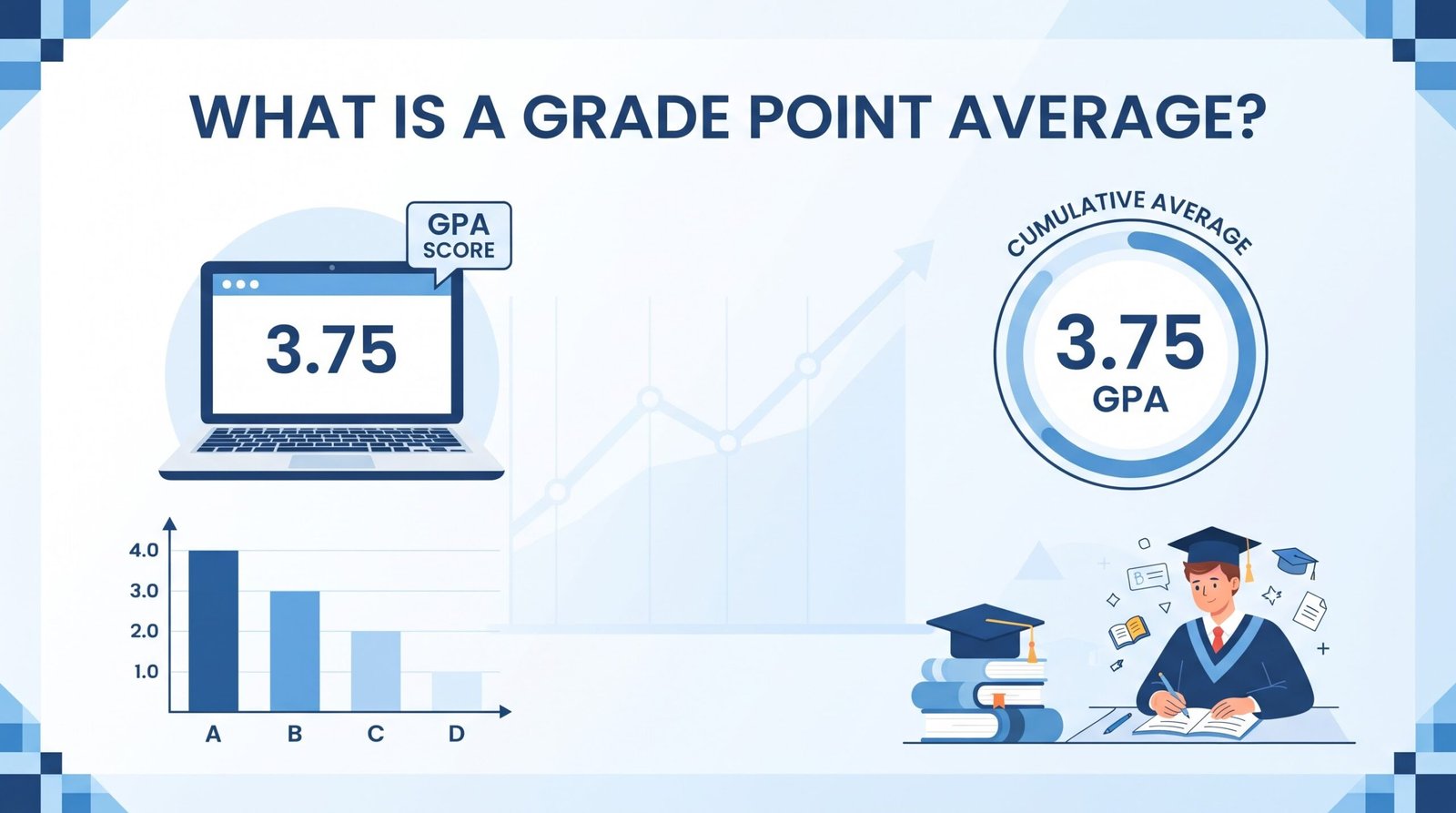
A Grade Point Average (GPA) is a numerical value used by schools, colleges, and universities to measure a student’s academic performance. It represents the average result of a student’s grades across one or more courses during a specific academic period. Instead of looking at individual marks or letter grades separately, GPA provides a simple number that summarizes overall academic achievement.
GPA is widely used in educational institutions around the world. Students, teachers, admission offices, and scholarship committees may use it to understand academic progress and compare performance according to a particular institution’s grading system.
Understanding what a Grade Point Average is can help students track their results, set academic goals, and make better decisions about their education.
What Does Grade Point Average Mean?
Grade Point Average refers to the average of the grade points a student earns in their courses. Each course grade is converted into a numerical value according to the institution’s grading scale.
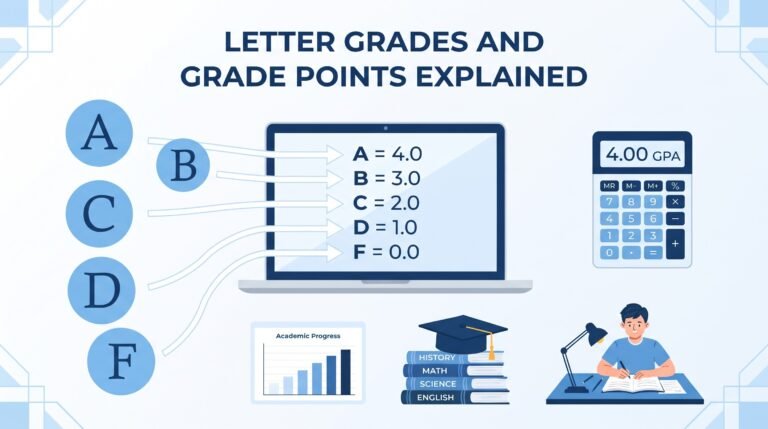
For example, a university may assign grade points such as:
| Letter Grade | Example Grade Point |
|---|---|
| A | 4.00 |
| A- | 3.70 |
| B+ | 3.30 |
| B | 3.00 |
| B- | 2.70 |
| C+ | 2.30 |
| C | 2.00 |
| D | 1.00 |
| F | 0.00 |
This is only an example of a grading scale. Actual grade-point values can differ between universities and educational systems.
Once the grade points are assigned, the institution calculates the average to determine the student’s GPA.
How Does GPA Work?
GPA works by converting course grades into numerical points and calculating an average. In many colleges and universities, courses have different credit hours. Credit hours represent the academic weight or workload assigned to a course.
A course with more credit hours may have a greater effect on a student’s GPA than a course with fewer credit hours.
For example, imagine a student completes three courses:
| Course | Grade Point | Credit Hours |
|---|---|---|
| Mathematics | 4.00 | 3 |
| English | 3.00 | 3 |
| Computer Science | 3.70 | 4 |
The grade points are multiplied by the credit hours to calculate quality points.
The calculation is:
- Mathematics: 4.00 × 3 = 12.00
- English: 3.00 × 3 = 9.00
- Computer Science: 3.70 × 4 = 14.80
Total quality points = 35.80
Total credit hours = 10
GPA = 35.80 ÷ 10 = 3.58
Therefore, the student’s GPA is 3.58.
What Is the GPA Scale?
A GPA scale is a system that converts letter grades or percentage marks into numerical grade points. Different educational institutions use different GPA scales, depending on their academic policies.
The 4.0 GPA scale is commonly used by many institutions, particularly in the United States. However, some universities use 5.0, 10.0, or other grading systems.
Here is an illustrative 4.0 GPA scale:
| GPA | General Grade Description |
|---|---|
| 4.00 | Excellent |
| 3.70–3.99 | Very Good |
| 3.30–3.69 | Good |
| 3.00–3.29 | Above Average |
| 2.00–2.99 | Average |
| 1.00–1.99 | Below Average |
| 0.00–0.99 | Very Low |
These descriptions are general examples, not universal academic standards. Always check your institution’s official grading policy to understand what each GPA value means.
What Are the Different Types of GPA?
Students may encounter different types of GPA during their academic journey. The most common types include semester GPA, cumulative GPA, and overall GPA.
1. Semester GPA
Semester GPA measures a student’s academic performance during one specific semester. It includes the courses completed within that semester according to the institution’s GPA rules.
For example, if a student earns a GPA of 3.65 during the fall semester, that number represents their performance for that particular semester.
2. Cumulative GPA (CGPA)
Cumulative GPA measures academic performance across multiple semesters. It combines the results of included courses from previous and current semesters.
For example, a student may earn a 3.40 GPA in the first semester, 3.60 in the second, and 3.75 in the third. Their cumulative GPA reflects the combined academic results, usually weighted by credit hours.
3. Overall GPA
Overall GPA generally refers to a student’s combined academic average over a broader period, such as an entire degree program. The exact meaning and calculation can vary between educational institutions.
Why Is Grade Point Average Important?
GPA is an important academic measurement because it helps students and educational institutions understand academic performance.
Some common reasons GPA matters include:
1. Academic Progress: GPA helps students understand whether their academic performance is improving, declining, or remaining consistent.
2. Scholarship Opportunities: Some scholarships require students to maintain a minimum GPA to qualify or continue receiving financial support.
3. University Admissions: Colleges and universities may review GPA when evaluating applications from prospective students.
4. Academic Standing: Institutions may use GPA to determine whether students meet academic requirements or need additional academic support.
5. Career Opportunities: Some employers consider academic performance when reviewing applications, particularly for internships, graduate positions, or entry-level roles.
However, GPA is not the only measure of a student’s abilities. Skills, experience, projects, communication, and practical knowledge can also be important.
What Is Considered a Good GPA?
A good GPA depends on the grading scale, educational institution, academic program, and personal goals.
On a typical 4.0 scale, students often consider a GPA of 3.0 or higher a strong academic result. A GPA of 3.5 or above may be competitive for certain scholarships and academic opportunities.
However, requirements differ. Some universities may require a specific GPA for admission, while others consider additional factors such as entrance examinations, personal statements, recommendations, and relevant experience.
Students should always check the GPA requirements of their target institution or scholarship program instead of relying on a general benchmark.
How Can Students Improve Their GPA?
Improving GPA requires consistent effort, effective study habits, and proper academic planning. Students can take several practical steps to improve their results:
- Create a Study Schedule: Organize study time for each subject and follow a realistic routine.
- Attend Classes Regularly: Classroom participation helps students understand important concepts.
- Complete Assignments on Time: Avoid missing deadlines and keep track of academic tasks.
- Focus on Difficult Subjects: Give additional attention to courses where improvement is needed.
- Prepare for Exams Early: Regular revision is usually more effective than studying everything at the last moment.
- Monitor Academic Results: Review grades after every assessment to identify areas that need improvement.
Students should also understand their institution’s course repeat and GPA calculation policies because these can affect future GPA results.
Frequently Asked Questions (FAQs)
1. What does GPA stand for?
GPA stands for Grade Point Average. It is a numerical measurement used to represent a student’s average academic performance.
2. Is GPA the same as percentage?
No. GPA and percentage are different grading measurements. GPA represents performance using grade points, while percentage represents marks out of 100. Conversion between them depends on the institution’s official policy.
3. Is a 3.5 GPA good?
On a typical 4.0 scale, a 3.5 GPA is generally considered a strong academic result. However, its exact value depends on the institution’s grading system.
4. What is the difference between GPA and CGPA?
GPA commonly measures academic performance during a specific semester or period, while CGPA represents cumulative performance across multiple semesters.
5. Can GPA change every semester?
Yes. A student’s GPA can change after each semester because new grades are added to their academic record. The cumulative GPA may increase or decrease depending on the new results and credit hours.
6. How can I calculate my GPA?
In a credit-hour-based system, multiply each course’s grade points by its credit hours, add the quality points, and divide the total by the included credit hours.
Conclusion
A Grade Point Average is an important tool for measuring and understanding academic performance. It converts course grades into numerical values, making it easier for students and educational institutions to evaluate academic progress.
Whether you are studying in school, college, or university, understanding GPA can help you monitor your results, identify areas for improvement, and work toward your academic goals.
Remember that every institution may have its own grading scale, credit-hour rules, and GPA calculation policies. For accurate results, always follow your institution’s official academic guidelines.