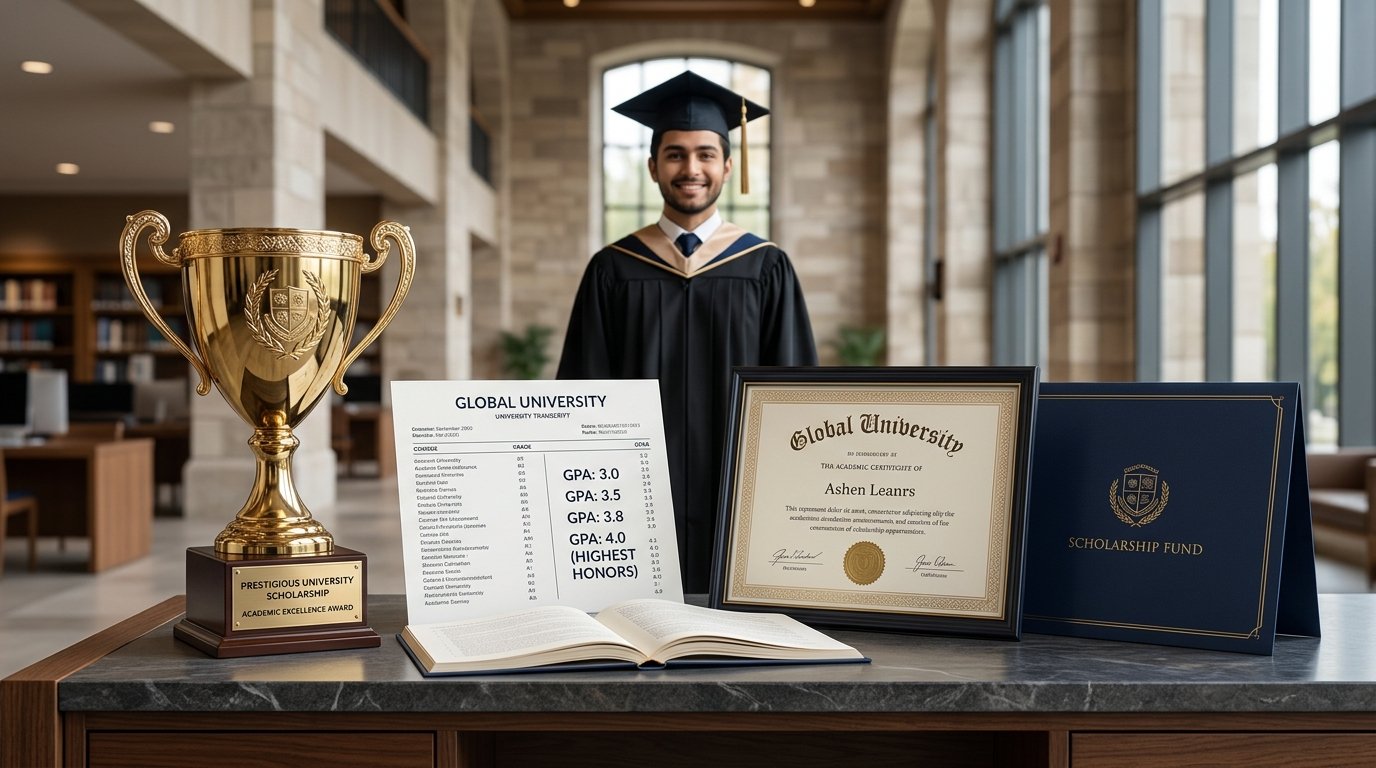
Getting a scholarship can make university education more affordable and help students focus on their academic goals. However, one of the most common questions students ask before applying is: What GPA do you need to qualify for a scholarship?
The answer depends on the scholarship provider, university, country, degree program, and type of financial assistance. Some scholarships require a high GPA, while others consider financial need, extracurricular activities, leadership experience, or a combination of academic and personal achievements.
For students using a 4.0 GPA scale, a GPA of 3.0 or higher can meet the minimum academic requirement for some scholarships. More competitive merit-based awards may expect a GPA of 3.5 or above. However, these are general examples rather than universal requirements.
In this guide, you will learn about common GPA requirements, different types of scholarships, minimum academic standards, and practical ways to strengthen your scholarship application.
What GPA Do You Need to Get a Scholarship?
There is no single GPA requirement for every scholarship. Each organization establishes its own eligibility rules.
On a commonly used 4.0 scale, scholarship requirements may fall into these general ranges:
| GPA | Possible scholarship opportunities |
|---|---|
| 3.8–4.0 | Highly competitive merit-based awards |
| 3.5–3.79 | Many academic excellence scholarships |
| 3.0–3.49 | Some merit and university scholarships |
| 2.5–2.99 | Selected institutional or need-based opportunities |
| Below 2.5 | Some need-based, community, or special-category awards |
This table is only a general guide. It does not represent official eligibility requirements. Some scholarships have higher minimums, while others do not require a particular GPA at all.
Always check the scholarship provider’s official eligibility criteria before applying.
Is a 3.0 GPA Good Enough for Scholarships?
A 3.0 GPA can be enough for certain scholarship programs, especially those that combine academic performance with financial need or other eligibility conditions.
For example, some university scholarships accept students with a minimum GPA of 3.0, while others require higher academic performance for larger tuition discounts.
A 3.0 GPA may be worth considering when searching for:
- University financial assistance programs
- Selected merit-based scholarships
- Departmental scholarships
- Community and nonprofit awards
- Scholarships that consider financial circumstances
However, meeting the minimum GPA requirement does not guarantee that you will receive an award. Scholarship providers may compare applicants, consider available funding, and apply additional selection criteria.
Is a 3.5 GPA Good for Scholarships?
Yes. A 3.5 GPA is a strong academic result on a 4.0 scale and may make you eligible for a wider range of merit-based opportunities.
Scholarships designed to recognize academic achievement often look for students with consistently high grades.
A 3.5 GPA can be useful when applying for:
- Academic excellence scholarships
- University merit awards
- Graduate study funding
- Departmental academic awards
- Certain international scholarship programs
Some programs may require a higher GPA, particularly when the number of awards is limited. Others may consider your overall application rather than relying only on grades.
Do All Scholarships Require a High GPA?
No. Scholarships are available for different purposes, and academic performance is not always the only eligibility factor.
Understanding the main scholarship categories can help you find opportunities that match your academic record and personal circumstances.
1. Merit-Based Scholarships
Merit-based scholarships reward students for academic achievement or other outstanding accomplishments.
A strong GPA is often an important requirement. Some awards also consider examination results, class rankings, research, leadership, or extracurricular achievements.
Students with higher GPAs may have an advantage when competing for academic scholarships, but the exact requirements depend on the provider.
2. Need-Based Scholarships
Need-based scholarships are designed to support students who have financial difficulties.
These programs may evaluate household income, family circumstances, educational expenses, and academic progress. Some require a minimum GPA, but it may be lower than the threshold for a highly competitive merit scholarship.
If your GPA is not exceptionally high, do not automatically assume that you are ineligible for financial assistance.
3. Athletic Scholarships
Athletic scholarships support students who demonstrate strong ability in a particular sport.
Depending on the institution and program, applicants may need to meet academic standards as well as athletic selection requirements.
Coaches or scholarship committees may review competition results, performance records, and eligibility rules.
4. International Scholarships
International scholarships help students study in another country. Their eligibility requirements can be different from those of local university awards.
Some programs require a minimum GPA or equivalent percentage. Others consider academic transcripts, English-language proficiency, recommendation letters, personal statements, and professional experience.
Applicants should also check whether their previous qualification is recognized and how their grades are evaluated.
5. University-Specific Scholarships
Many universities offer scholarships to incoming and continuing students.
Some awards are based on admission results, while others depend on semester GPA, cumulative GPA, or class position.
For example, Bahria University lists a minimum previous-semester GPA of 3.75 for certain non-engineering merit awards and 3.60 for engineering programs. These thresholds apply to its specified award, not to all scholarships. Source: Bahria University
GPA Requirements for Scholarships in Pakistan
Scholarship requirements in Pakistan vary by institution and funding program. Some use CGPA on a 4.0 scale, while others accept percentage marks or apply separate criteria for different degree levels.
Here are examples from official university and education department information:
| Scholarship or institution | Published academic requirement |
|---|---|
| KPEF Merit-cum-Inaffordability Scholarship | 3.00 CGPA or 70% marks, as applicable |
| Higher Education Endowment Fund (HEEF), KP | 3.0 GPA or 65% marks, as applicable |
| Bahria University merit award for specified programs | 3.75 for non-engineering and 3.60 for engineering |
| UMT merit scholarship for certain BS programs | Maintenance thresholds vary by award level |
The Khyber Pakhtunkhwa Education Foundation publishes a minimum requirement of 3.00 CGPA or 70% marks for its Merit-cum-Inaffordability Scholarship, subject to other eligibility conditions. Official KPEF information
The Higher Education Department of Khyber Pakhtunkhwa also lists a 3.0 GPA or 65% marks for the Higher Education Endowment Fund, subject to the program’s other conditions. Official HEEF information
These examples demonstrate why students should read the complete scholarship policy rather than relying on a general GPA estimate. Eligibility may also depend on domicile, degree level, approved institutions, financial circumstances, and application deadlines.
Do You Need a High CGPA to Renew a Scholarship?
Receiving a scholarship is only one part of the process. Some universities require students to maintain a minimum academic result to continue receiving financial assistance in future semesters.
For example, a university may award a tuition fee discount when a student first enrolls but require a specific CGPA every semester to renew that benefit.
Other programs may review semester GPA rather than cumulative GPA. Some may also require students to complete a full course load, avoid failed courses, or remain within the normal duration of their degree.
Before accepting a scholarship, find out:
- Whether the GPA requirement is semester-based or cumulative.
- What minimum GPA must be maintained.
- Whether repeated courses affect eligibility.
- Whether the scholarship covers tuition only or other expenses.
- Whether the award can be reduced or withdrawn.
- Whether students must reapply each academic year.
Understanding these rules can help you avoid unexpected problems later.
How to Improve Your GPA for Scholarship Eligibility
If your current GPA is below the required level, you can take steps to improve your academic performance.
1. Set a Clear Academic Target
Start by identifying the minimum GPA required for your preferred scholarship. Then compare it with your current CGPA and determine how much improvement you need.
2. Focus on Difficult Subjects
Review your previous grades and identify courses where you lost the most marks. Spend additional time understanding difficult topics and ask instructors for help when necessary.
3. Manage Your Study Time
Create a weekly study schedule that includes lectures, assignments, revision, and examination preparation. Consistent study habits can help you avoid last-minute pressure.
4. Complete Assignments on Time
Assignments, quizzes, presentations, and projects may contribute significantly to your final course grades. Submit complete work before deadlines and follow the instructions carefully.
5. Track Your Progress
Use your university transcript and a GPA calculator to monitor your academic performance. Calculate your semester GPA and estimate how future grades may affect your cumulative result.
6. Build a Stronger Application
Do not focus on GPA alone. Depending on the scholarship, you may strengthen your application with volunteer work, leadership experience, research projects, internships, recommendation letters, and a well-written personal statement.
What Documents Are Usually Required for Scholarship Applications?
Scholarship providers may request different documents, but common requirements include:
- Academic transcripts
- Previous degree or examination certificates
- National identification or passport documents
- Admission letter or enrollment confirmation
- Personal statement or scholarship essay
- Recommendation letters
- Proof of household income for need-based awards
- English-language test results, where required
- Updated resume or curriculum vitae
Prepare documents early and check whether official copies, certified translations, or specific application formats are required.
Frequently Asked Questions
Can I get a scholarship with a 2.5 GPA?
Yes, some scholarships may accept applicants with a 2.5 GPA, particularly certain need-based, institutional, or special-category programs. However, many competitive merit-based awards require higher grades.
Is a 3.0 GPA enough for a full scholarship?
It may qualify you for some scholarships, but a full scholarship often has additional academic, financial, or competitive requirements. Check the exact criteria of each program.
Can I get an international scholarship with a 3.5 GPA?
A 3.5 GPA can make you a competitive applicant for some international scholarships. However, requirements differ by country, university, degree, and funding organization.
Do scholarships consider semester GPA or CGPA?
Both are used. Some scholarships evaluate your most recent semester GPA, while others use your cumulative GPA. Always check the official application rules.
Can I apply for a scholarship if my GPA is low?
Yes, you should explore programs that consider financial need, extracurricular achievements, special circumstances, or other qualifications. Do not assume that every scholarship has the same academic threshold.
Does a scholarship require a 4.0 GPA?
No. A perfect 4.0 GPA is not required for every scholarship. Many programs accept students with lower GPAs, depending on their eligibility rules and selection process.
Conclusion
GPA requirements for scholarships vary widely. On a 4.0 scale, a 3.0 GPA may meet the minimum requirement for some opportunities, while competitive merit-based awards may expect a 3.5 GPA or higher.
However, academic performance is only one part of many scholarship applications. Financial need, leadership, extracurricular activities, research, personal achievements, and other qualifications may also influence selection.
The best approach is to identify scholarships that match your academic record, read their official eligibility criteria, and prepare your application carefully. If your GPA needs improvement, focus on consistent study habits and track your progress each semester.
A strong scholarship application is built through preparation, accurate information, and a clear understanding of what each funding program expects.